
Protocol WRC-NRW
Every repaired leak, counted.
The protocol for leak reduction on drinking water networks. Detection, repair and a verified measurement after repair turn lost water into certified, payable cubic metres.
02In short
How the leak protocol works.
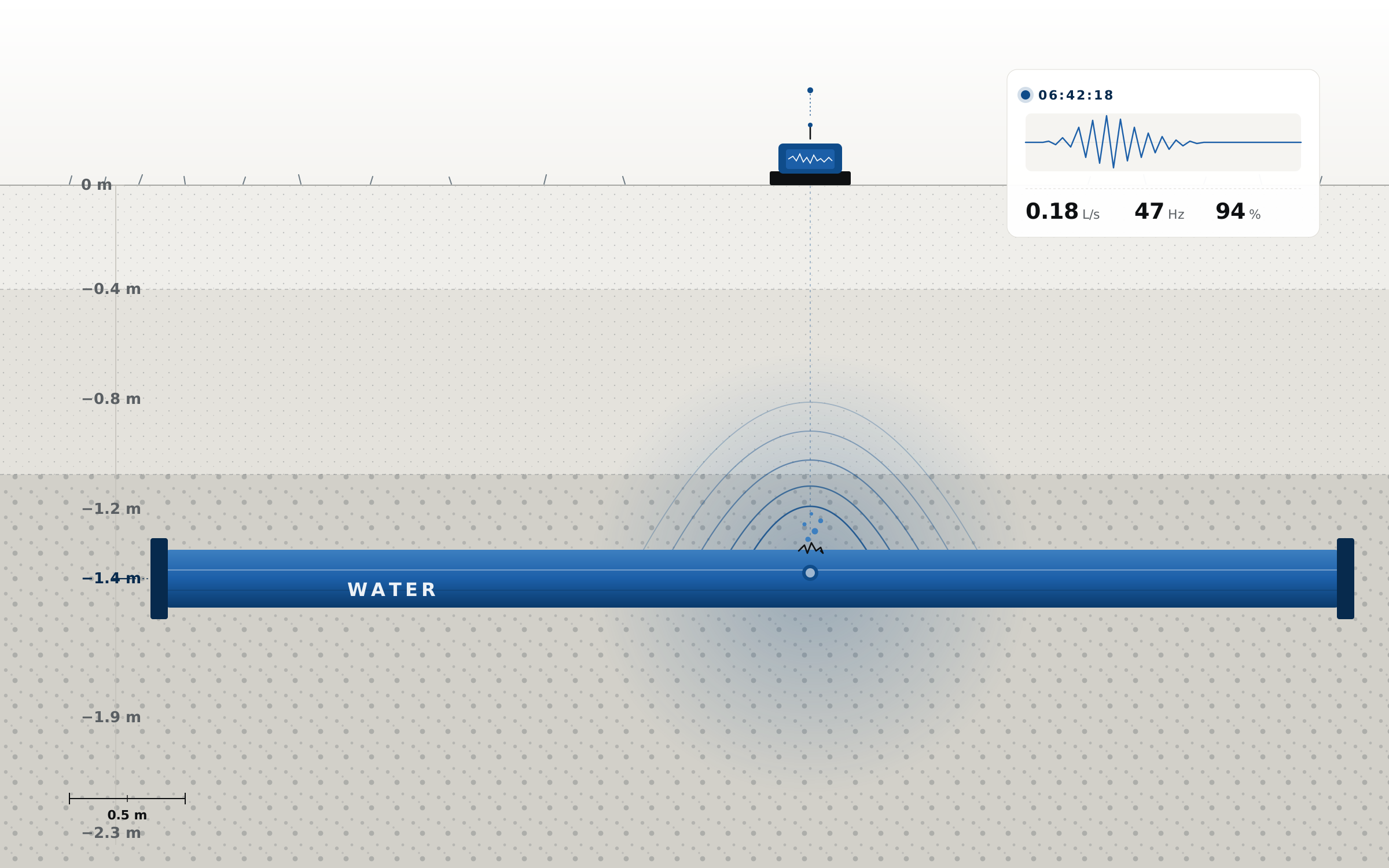
The protocol turns a leak programme into verified volumes. It counts the water that no longer leaks after repair, measured against the flow before repair.
- 01For utilities and leak detection or repair providers.
- 02Real losses only: apparent losses are excluded.
- 03Each verified cubic metre can be paid for, certified or co-funded.
03The gap
One litre in five never reaches the tap.
04What we verify
Three things, measured.
- 01Leak flow at detection, by the agreed method.
- 02Repair, with evidence (work order, location, check).
- 03Flow after repair, normalised for pressure and demand.
05What it pays for
Three ways to finance repairs.
- Payment per cubic metre saved, between provider and utility.
- Water Resilience Certificates for verified volumes.
- Corporate co-funding where companies depend on the basin.
06Get started
Status · Pilot 2026Run a leak programme? Pilot it with us.
Not the right page?All protocols Industrial water reuse
+Questions
Does detection alone qualify?
No. A certificate needs detection, repair and a verified measurement after repair.
Does it cover apparent losses (meter errors, theft)?
No. The protocol counts real losses avoided.
Who can join the pilot?
Utilities and leak detection or repair providers running a programme on a drinking water network. Founding pilots help finalise the protocol.
How is the saved volume paid for?
Three ways: payment per cubic metre between provider and utility, Water Resilience Certificates for verified volumes, or corporate co-funding in the basin.
Who verifies the measurement?
An independent, accredited body checks the evidence and signs. Veracity never verifies.